Essay structure: give every paragraph a clear job
Updated October 12, 2026 · 5 min read · 6 sections
A paragraph can be grammatically tidy and still have no clear purpose. When I revise an essay, I give each paragraph a short description of its job before polishing individual sentences. If I cannot explain what it contributes to the answer, a smoother transition will not solve the problem. This approach turns a vague instruction to “improve structure” into a sequence of decisions about the actual draft.
Turn the prompt into a question you can answer
Read the instruction verb carefully. Explain asks for an account of how or why; compare asks you to establish a meaningful relationship; evaluate asks for a judgement supported by criteria. A paragraph that describes background may help any of those tasks, but background alone does not finish them. Write the central question in plain language beside the draft.
Next, write a provisional answer. It need not be a polished thesis yet. A useful draft answer identifies the claim you intend to support and the boundary of that claim. For a hypothetical school-garden proposal, “a garden has benefits” is too broad to guide a structure. “A small trial can support a specific learning activity if maintenance is planned” gives the discussion something to establish.
Check the required word range and any source or format rules separately. The essay checker can compare a word count with the minimum and maximum you enter. It cannot decide whether your interpretation of the task is correct. Keep the prompt visible during revision rather than using the count as a substitute for reading it.
Give each paragraph a contribution, not just a label
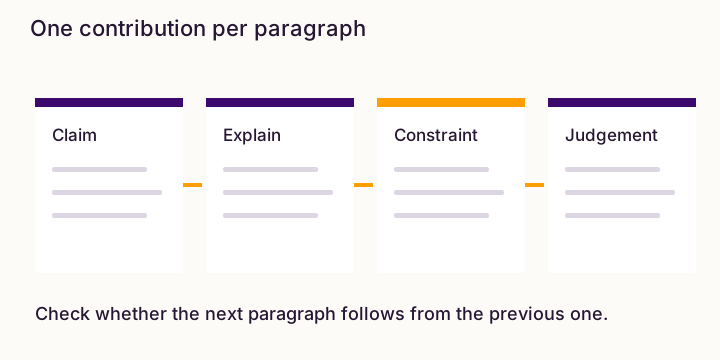
Introduction, Body and Conclusion are useful broad roles, but they do not tell you what a particular paragraph achieves. In the margin of your own document, write a more precise description: defines the problem, explains the proposed activity, supplies evidence, examines a limitation, or draws the final judgement. These descriptions make missing steps easier to spot.
The Purdue OWL discussion of paragraphs connects paragraph construction with unity, coherence and development. I use those ideas as review questions rather than a rigid requirement that every paragraph begins with a formulaic topic sentence. A central idea can emerge through the paragraph, provided the reader can follow its purpose.
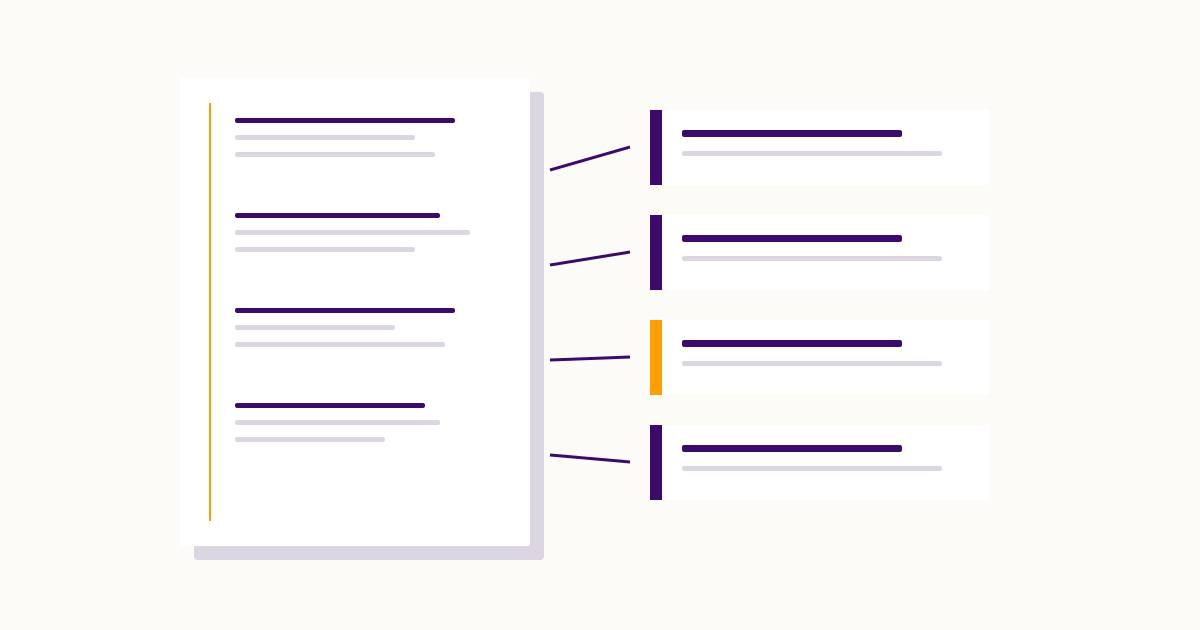
If two paragraphs have the same description, inspect whether they develop distinct evidence or repeat a claim. If one paragraph needs several unrelated descriptions, consider splitting it. A split should make the reasoning clearer, not merely make the bars in the paragraph diagram more even. The manual role labels in the tool stay broad because a machine cannot establish the quality of the argument from position alone.
| Paragraph | Intended contribution | Revision question |
|---|---|---|
| Opening | Define a limited garden trial | Is the proposal specific enough to assess? |
| Learning activity | Explain a comparison students would carry out | Are the changed and controlled factors clear? |
| Practical constraint | Describe maintenance outside lessons | Who takes responsibility for the routine? |
| Final judgement | Connect the activity with a workable next step | Does the judgement follow from the discussion? |
Connect the evidence to the claim
A quotation or example does not explain its own significance. After introducing evidence, state what it supports and how strongly it supports that point. If an example is hypothetical, mark it as hypothetical. If a factual claim depends on a source, check the original context and the assignment’s citation requirements rather than borrowing a reference you have not read.
For the garden proposal, saying that a class could compare two planted areas describes an activity. Explaining what students would record makes the activity more concrete. Explaining why the comparison serves the intended lesson connects the detail to the proposal. Each step performs a different job. Repeating the phrase “educational benefits” does not add that missing connection.
A limitation can strengthen the reasoning when it changes the judgement honestly. Maintenance, available space or the need for a fair comparison might constrain the example. Do not introduce an objection only to dismiss it without evidence. Show what the constraint means for the size or design of the proposed trial.
Check the order by removing the connecting words
Read the first sentence of each paragraph in sequence. Does the line of thought move from the question to an answer, or does it jump between unrelated details? Then read without the opening transition words. If the relationship disappears when “furthermore” or “therefore” is removed, the underlying connection may need more explanation.
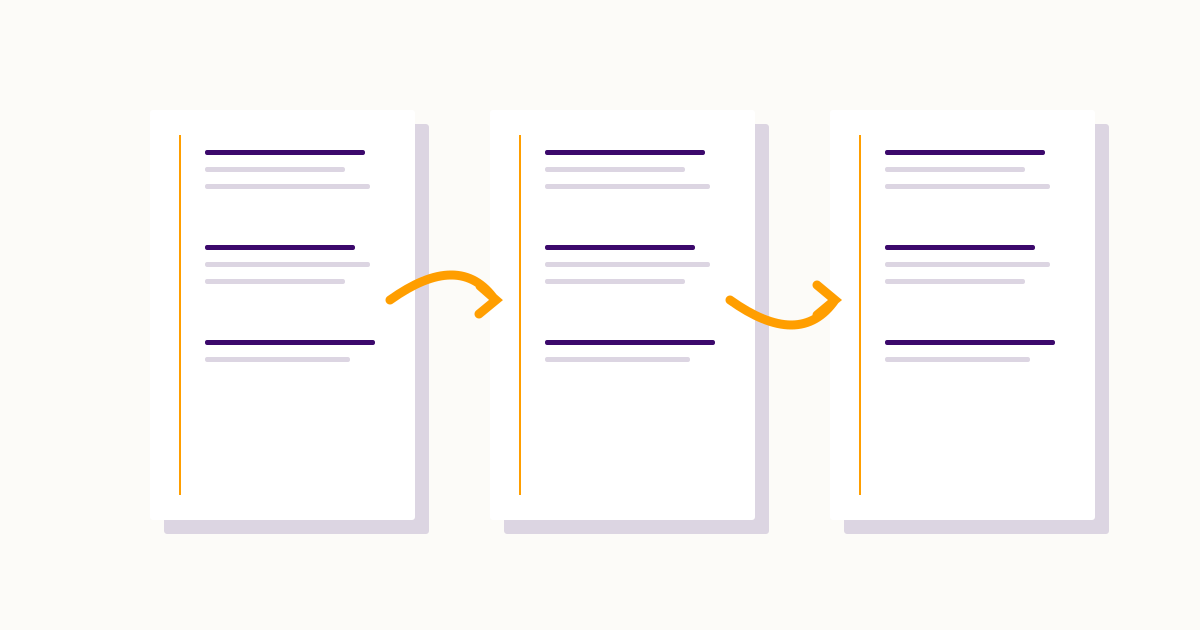
A useful order depends on the task. A comparison may alternate between two subjects using shared criteria. An evaluation may establish criteria, assess the evidence and then reach a judgement. A proposal may move from a problem to an activity, constraints and a next decision. Choose an order that reduces the reader’s work; do not force every task into the same five-paragraph outline.
The paragraph map can reveal that a major objection receives only a few words while a minor detail occupies a large block. That is a prompt to inspect emphasis, not a diagnosis. A short paragraph may be enough for a simple transition, and a complex piece of evidence may need more room.
Let the conclusion reflect what the essay established
A conclusion should answer the question at the level supported by the discussion. It can explain the consequence of the argument or name a practical next step, but it should not depend on a major new piece of evidence. If the final judgement surprises you, revise the earlier paragraphs or narrow the judgement.
In the hypothetical proposal, the conclusion might support a limited trial subject to a defined maintenance routine. It should not suddenly promise broad improvements that the essay has not established. Check qualifying words as carefully as confident ones: “may”, “under these conditions” or a stated limitation can be essential to an accurate answer.
The checker does not award points for having three paragraphs or placing a conclusion last. You choose the labels. If the text uses an unconventional form required by the assignment, judge that form on its own terms.
A practical revision sequence
First check the answer and paragraph jobs. Next check whether the evidence supports those jobs. Then review ordering and connections. Only after that should you concentrate on sentence rhythm, repetitions and punctuation. Polishing a paragraph that will be removed is rarely the most useful first move.
Keep baseline statistics before the sentence-level pass if you want to see what changed. Inspect the revised text alongside the comparison: fewer words can mean less repetition, but it can also mean lost evidence. Save the finished draft in your own document. The checker’s explicit tab history disappears when the page reloads.
FAQ
Must every essay use five paragraphs?
No. Follow the assignment and the reasoning the answer needs. A fixed paragraph count does not establish a complete argument.
Can the checker identify my thesis?
No. You choose broad paragraph roles and assess the actual claim and supporting evidence yourself.
Should all paragraphs be the same length?
No. Length should suit the paragraph’s contribution. The map highlights differences for review rather than requiring symmetry.